Table of Contents
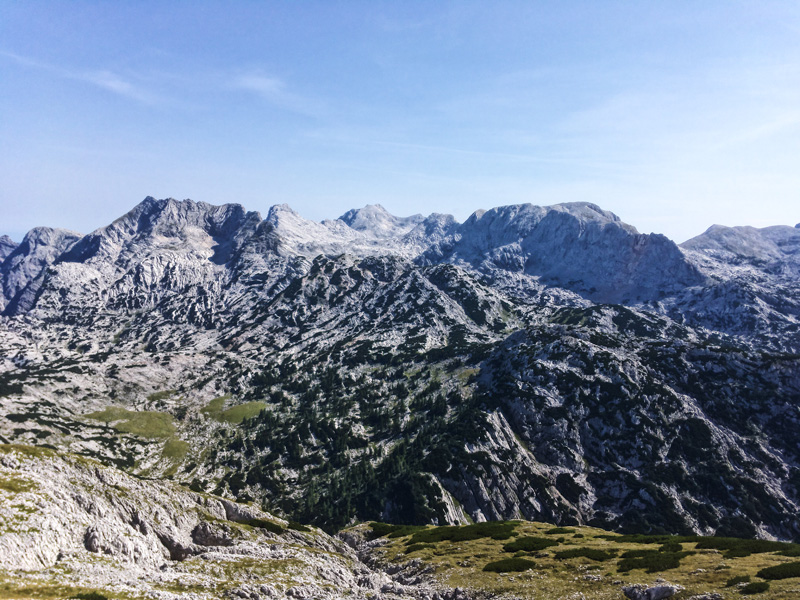
The Alps are becoming an increasingly interesting alternative to Polish mountains. Especially since, over time, our native trails are quickly becoming more crowded. Austria, contrary to appearances, is not that far away and has a lot to offer mountain enthusiasts.
First of all, the choice of hikes is more than abundant. This results in solitude on the trail not being difficult to find, even during peak season (as long as we avoid the most popular peaks in a given region - usually these are the highest ones). Roads in the Alps are excellently maintained and marked, and the network of mountain huts is the best in the world. In Austria alone, there are about 640 of them!
I mainly hike in the eastern part of the Alps (due to proximity to where I live) and some information will relate to these areas. Mainly regarding prices, accommodation, and tent camping. However, most of the knowledge is universal, at least when it comes to Austria.
How to Get to the Austrian Alps
It's best to travel to the Alps by car. The fact is, the choice of places accessible by public transport is limited, and planning itself is much more complicated (and the journey more expensive, unless you're traveling alone).
If you're from northern Poland and the prospect of spending 10-12 hours in a car terrifies you, you can choose the option of a cheap Wizz Air flight from Gdansk or Warsaw and renting a car on site (unfortunately this is not the cheapest option, rental costs about 30-50 euros per day)
The road to Austria in most cases leads through the Czech Republic (Brno), or through Slovakia (Bratislava). Everything depends on your starting point. As always, I recommend using Google Maps, for these types of routes you can rely on them (when it comes to local roads or creative shortcuts, it varies - I recommend caution :) )
Vignettes
An important topic - you must remember them. It doesn't matter whether we're going through the Czech Republic or Slovakia - purchasing a vignette is unavoidable. Every gas station near the border has them in their offer
It's worth buying the Slovak or Czech one at a gas station in Poland before the border, while the Austrian one can be purchased right after entering Austria at a BP station on the right side (the cost is just under 10 euros for 10 days). By buying in Austria, you'll avoid the commission imposed by the Polish intermediary.
For each of these vignettes, we'll pay a similar price - up to 60 zlotys for 10 days with commission.
Speed Limits and Fines
On Czech, Slovak, and Austrian highways, there is a speed limit of 130 km/h. You need to be especially careful in Slovakia - the local police like to hunt Polish drivers, and fines are not among the lowest. When it comes to sending fines to Poland, it goes very smoothly, nobody gets away with it :)
Classic places where you can get caught in a "promotion" are highway sections running through cities, especially in Austria (here the limit is usually 80 km/h). I especially advise caution when approaching Vienna, before the city itself the limit starts at 100, then drops to 80. Not far beyond that 80 mark is a speed camera, I know many people who have "hit" it. A moment of inattention can cost you dearly - exceeding the speed limit by 50 km/h can result in a fine of even 500-700 euros!
If you're a fan of beer "with lunch" - both in the Czech Republic and Slovakia there is a 0.0 permille alcohol limit. You can very easily cause yourself problems. Austria is much more tolerant in this regard, here up to 0.5 permille in exhaled air is allowed
Which Mountain Insurance to Choose
Mountain insurance is essential, thanks to which you can sleep peacefully. Conditions on the trail can change in an instant, and the costs of a potential rescue operation are dizzying.
Fortunately, the cost of insurance is not huge. Definitely the best choice is membership in one of the mountain associations operating in the Alps. In addition to the insurance itself, you have guaranteed discounts on accommodation in (almost) all mountain huts. The most popular association is Alpenverein (which also has its Polish branch).
However, I recommend contacting the Polish Mountain Association (link to Facebook fanpage here) operating under ÖTK (Österreischischer Touristenklub) in Vienna. They have slightly better insurance, discounts in mountain huts are identical, and they approach mountain topics very professionally - they are happy to offer advice. In addition, the contact is more personal than with Alpenverein. The cost of membership (in 2018) is about 56 euros per year.
What Are the Prices in the Austrian Alps
Prices in shops.
Shops are obviously the most cost-effective option for stocking up on food or drinks. Prices are not much higher than in Poland (the difference is a maximum of 20%, excluding certain product groups such as vegetables or meat). Especially if you go shopping at a discount store (Hofer or Lidl), you won't feel it painfully.
Shop Opening Hours
Shops are open on weekdays until 8 pm at the latest (sometimes it's 7 pm), on Saturdays until 6 pm. They are closed on all Sundays.
Prices in Mountain Huts and Restaurants
When it comes to prices in Austrian establishments, they are more or less uniform everywhere (at least when it comes to Vienna and the eastern part of the Alps). Prices in mountain huts can easily be compared to those in restaurants. The values below are approximate, but deviations should not be large in most establishments (excluding of course typically exclusive places, although even here it's worth checking the menu, because sometimes you can be pleasantly surprised).
- soup (Suppe): approx. 4 euros
- main course without meat (Hauptspeise vegetarisch): approx. 8-10 euros
- main course with meat (Hauptspeise mit Fleisch): approx. 10-14 euros
- main course, game (Wild): approx. 14-16 euros
- cake/dessert (Kuchen/Nachspeise): approx. 3-6 euros
- coffee/tea (Kaffee, Tee): approx. 3 euros
- beer (Bier): approx. 4 euros
- glass of wine - 0.125l (Wein): 2.5 - 4 euros
If you're looking for a hearty, warm meal in a mountain hut that won't ruin your wallet, choose goulash soup (Gulaschsuppe). It usually costs about 6 euros and is served with (most often homemade) bread. A filling option, I recommend :)
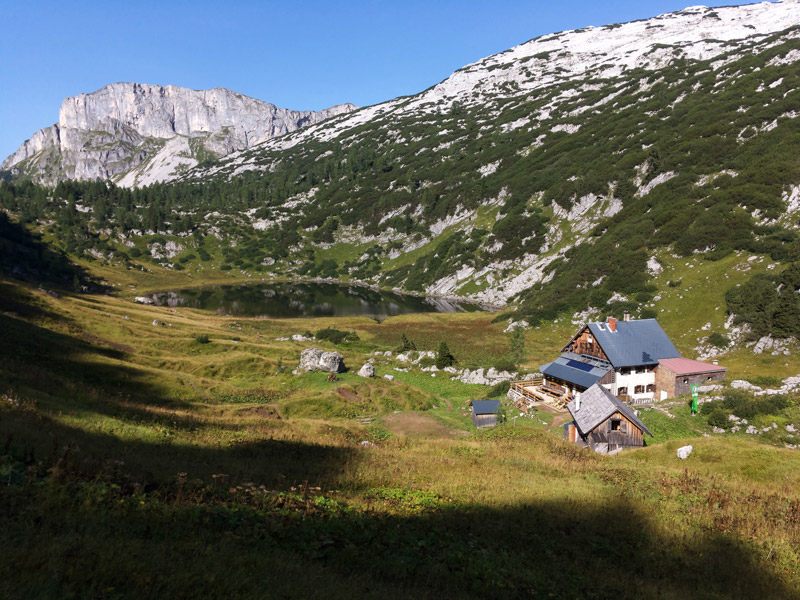
Accommodation in the Austrian Alps and Its Price
Hotels/apartments/cottages
The choice of such facilities is really large, and the standard is good. I have not been disappointed yet, even when planning a trip at the last minute. Book accommodation well in advance, in popular areas there is often a shortage of places during the season.
To search for this type of accommodation, I usually use popular search engines like booking.com or airbnb due to speed and ease of use. They also have intuitive maps, which makes it easier to find accommodation in a convenient location.
Prices
When it comes to prices, compared to Polish mountains it's a bit more expensive. The cost per person in normal standard is at least 30-35 euros. You can find cheaper with private individuals, but I personally have not used this type of option yet. Being in the mountains, I usually don't have time to ask locals ;) If you decide on a hotel, the norm is a price from 50 euros upwards per person.
Mountain Huts
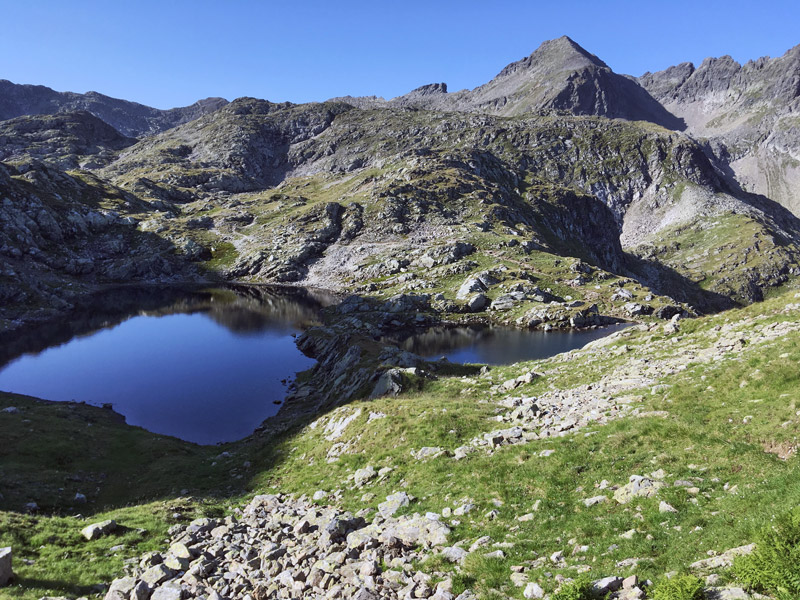
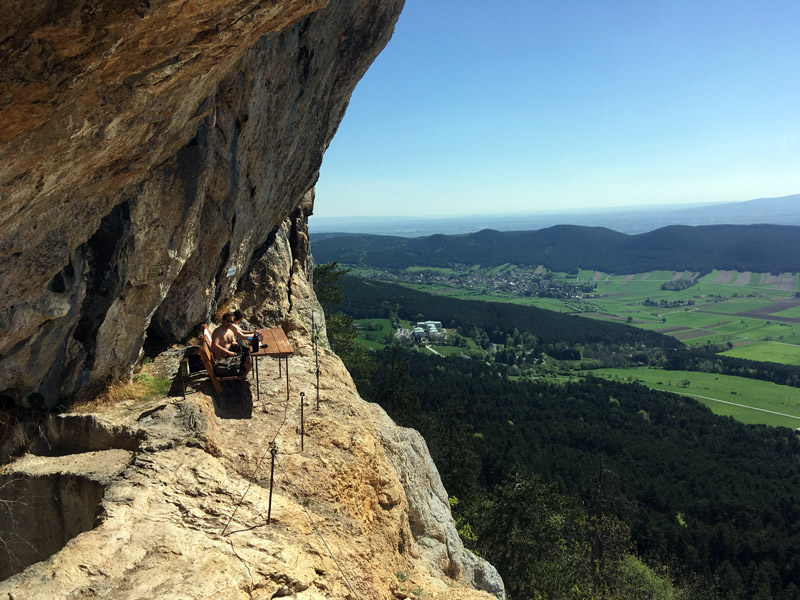
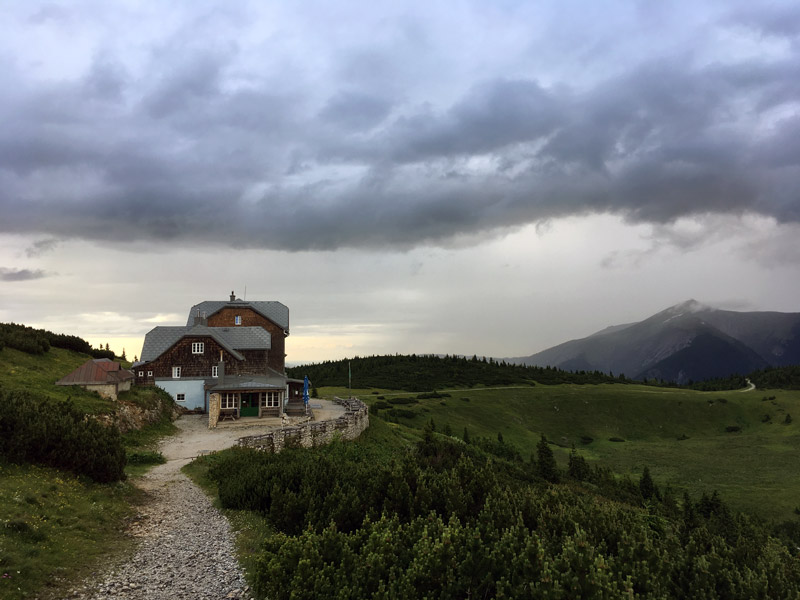
I use this option most often. There is nothing more beautiful than a night in the mountains surrounded by mountain peaks! As I mentioned in the introduction - the network of mountain huts in the Austrian Alps is excellent. However, I also recommend making a reservation as early as possible here - in more interesting areas, shortly before the trip there is often a problem with finding a place.
It's best to call and book 3 months before the planned trip - it usually costs nothing and can make things much easier. But first you need to search for these huts. How to do it?
Well, Alpenverein provides an intuitive search engine, partially translated into Polish - you can find it at - https://www.alpenverein.at/huetten-pl/finder.php.
Mountain huts can be searched by name, region, mountain range, or expedition goal. Very useful tool, thanks to the attached map it can also serve to search for interesting trails.
The page shows approach times (Gehzeit, this hasn't been translated), as well as neighboring huts and the most important trails with times. Sometimes prices are also given, but usually you need to find the hut's website on Google and look for the price list there (most often under the name Übernachtung or Preise). Speaking of prices...
Accommodation Prices in Mountain Huts
Accommodation prices in mountain huts are not terrifying, so it's often the most cost-effective option. It's worth searching and using them as an alternative to accommodation in the valley, especially since many huts have very short approaches, and you can even drive by car (often for an additional fee, then such a road is called Mautstraße).
If you book early, in larger huts you can count on renting a room with a bed (Bett). Then the cost will be about 30-40 euros (sometimes with breakfast - Früstuck, sometimes you have to pay extra for a double room - Zweierzimmer).
The most common accommodation option in a mountain hut is a dormitory (Lager). Here prices are in the range of 15-25 euros per person. In some huts this is the only way to spend the night.
As I mentioned earlier, members of mountain associations (Mitglieder der Alpenvereine) are entitled to discounts. They amount to about 10 euros, sometimes more. And immediately the prices look more pleasant, don't they? :)
Camping Sites
In alpine areas you can often find camping sites, which is a great alternative in warm months. They are usually attractively located and won't ruin our wallet.
When staying in such a place, we must expect a cost of 20-35 euros for two adults (2 Erwachsene Personen), with a car and tent (Zelt). This price usually includes internet and electricity (Strom)
Trails in the Austrian Alps
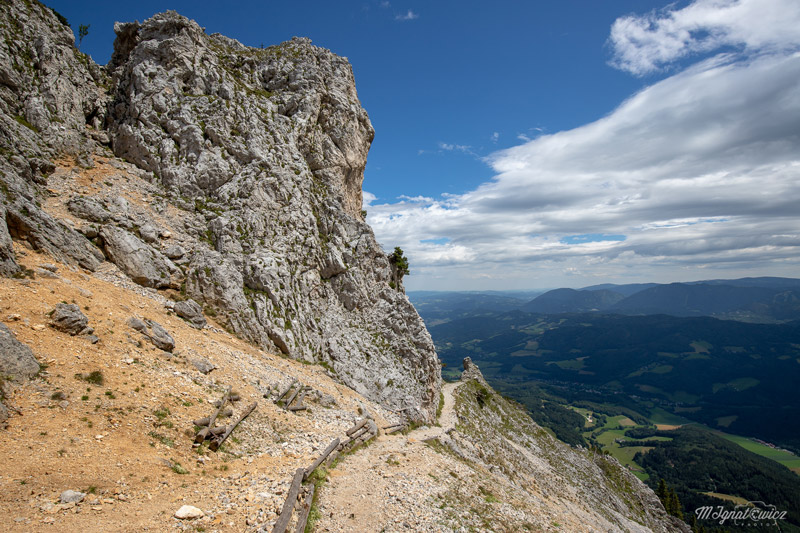
As is known, the basis of a safe and pleasant mountain trip is proper planning. But how to plan a route in the Alps?
A couple of websites come to our aid. In each of them we will find different search options (by regions, map, etc.), as well as different language versions. Trail descriptions are often in German, but the most important information (such as trail difficulty, length, etc.) is usually translated automatically. Alternatively, you can use Google Translate to translate the detailed description if the site doesn't offer such an option.
If you find an interesting trail on one of the sites below, type its name into Google and compare a couple of alternative descriptions. After all, users add them, it never hurts to verify the correctness of the information contained.
Here are some sites where you can find trails in the Alps (and beyond):
How do I search for interesting hikes?
Honestly, I'm not a big fan of using the search engines of the above-mentioned services. Maybe it's a matter of habit? I don't know. I personally most often use traditional, paper maps combined with searching Google for specific peaks and trails leading to them. Often I still end up with descriptions posted on the above-mentioned services.
If I don't have access to a map, I search for a scan of one in Google images - there are quite a few of them.
If I don't have access to a map, I search for a scan of one in Google images - there are quite a few of them.
A few German words helpful when searching for trails:
- Gehzeit - walking time
- HM / Höhenmeter - meters of altitude (used when giving elevation gain)
- Zustieg - approach (e.g. to a mountain hut)
- Abstieg - descent
- Schwierigkeit - difficulty
- Leicht - easy
- Mittel - medium
- Schwierig - difficult
- Hütte - mountain hut
- Schwindelfreiheit und Trittsicherheit - no fear of heights and sure-footedness. A phrase used when describing more technically difficult trails.
Trail Markings in the Alps
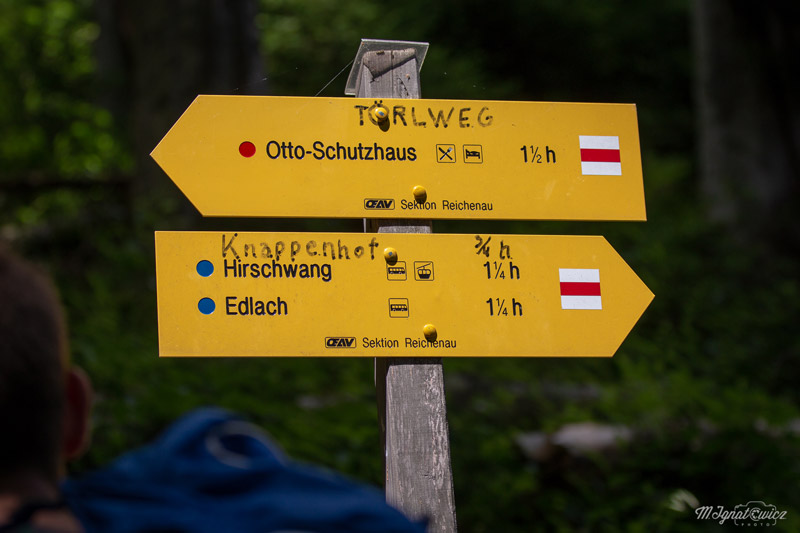
In the Austrian Alps, trails are marked with yellow signs, on which, in addition to the name of the destination and approach time, you will find a colored dot that indicates the difficulty of the trail. If you don't notice any dot next to the name, then assume it's an easy trail.
Trail markings on the ground (e.g. on trees or rocks) have nothing to do with trail difficulty! Most often it's red, although this is not a rule
Blue - hiking trail, easy (Wanderweg). Technically simple route, without major exposure. In most cases suitable for hiking with children.
Red - mountain trail, medium difficulty (Bergweg - Mittelschwierig). Trails of this difficulty are much narrower and steeper. There may be sections with greater exposure and artificial aids in the form of, for example, steel cables, where it will be necessary to use hands. Appropriate footwear and no fear of heights are required here.
Black - mountain trail, difficult (Bergweg - Schwierig). Routes of this difficulty are steeper and much narrower. Exposed sections where you often need to help yourself with your hands are not uncommon here. Good fitness, considerable mountain experience, and appropriate equipment are necessary.
WARNING: in Allgäu, Vorlarlberg, and Switzerland, blue color indicates a difficult trail. Remember this when going to those areas!
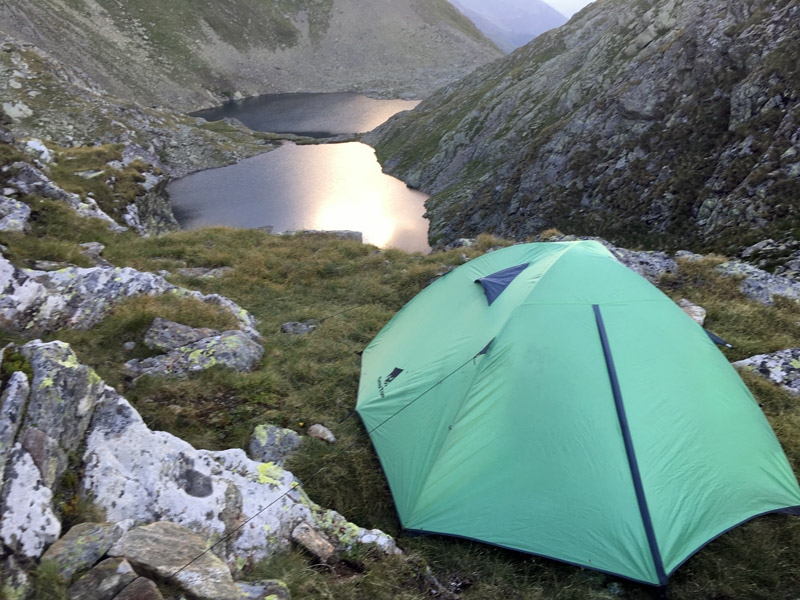
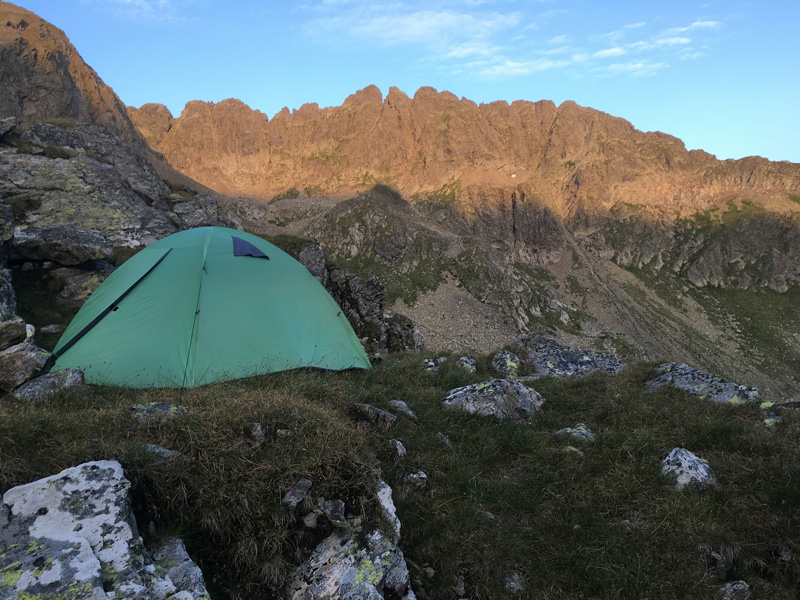
Tent Camping in the Austrian Alps
When it comes to tent camping, the topic is not among the simplest in Austria, because a lot depends on local regulations.
Generally, below the tree line there is an absolute ban on camping, the only exception is having written permission from the owner.
In higher altitude areas, regulations differ depending on the Land (i.e. federal state, something like our province) where you are located. However, unplanned, emergency bivouac for safety reasons is allowed everywhere. Reasons for such camping can be, for example, weather breakdown, injury, or sudden nightfall.
Even if regulations in a given Land allow tent camping, often hikes lead through national park (Nationalpark) or landscape park (Naturschutzgebiet) areas. In these places, separate regulations apply, it's worth checking more carefully before the trip.
What are the regulations regarding tent camping in individual Austrian Lands?
- very restrictive approach - Lower Austria (Niederösterreich), Carinthia (Kärnten), Tyrol. Camping outside designated areas is prohibited and carries high fines.
- less restrictive approach - Styria (Steiermark), Upper Austria (Oberösterreich), Salzburg and Vorlarlberg. Here camping in mountain areas is allowed while maintaining respect for the natural environment, of course. I remind you to check whether the place for the planned bivouac is not in protected areas!
And how does tent camping look in practice?
From my experience, it looks like there are no major repercussions when it comes to bivouacking in the mountains in Austria. I have not yet encountered a case of someone receiving a fine for wild camping.
Of course, I would avoid camping near mountain huts (tenants may have different approaches), as well as in the immediate vicinity of trails - you never know who is hiking in the area. Everything depends on the area and situation. If in doubt, it's worth calling the local Alpenverein branch and asking about regulations in the specific place we plan to visit. There should be no language problems - Austrians speak English very well!
Summary
Congratulations on your perseverance - you have just reached the end of my guide. You are now a few steps closer to planning your dream vacation in an alpine setting. Of course, the topic is not completely exhausted. If any questions come to mind - feel free to write in the comments, I will always answer!
Have you perhaps already chosen an alpine region that you will visit this year? If you don't have an idea where you could go - let me know, we'll come up with something together :)