Table of Contents
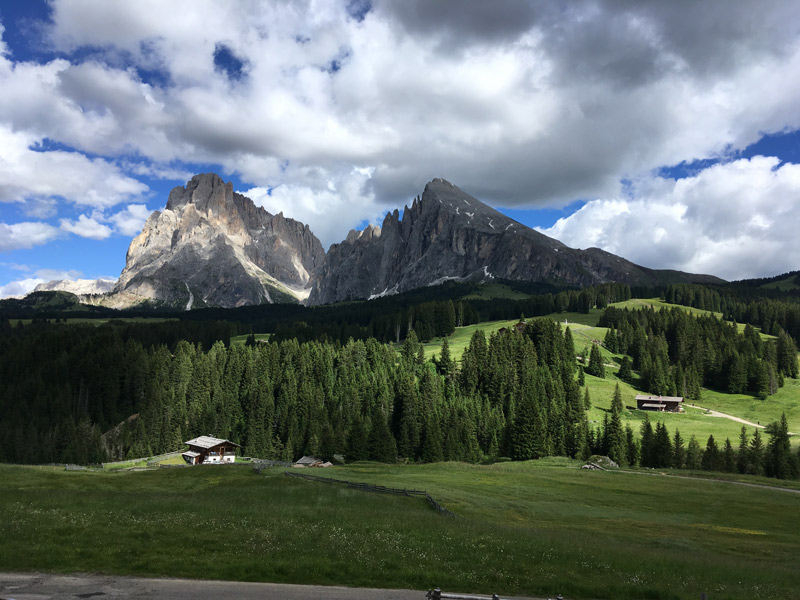
Welcome to the second part of the journey to Seiser Alm. This time I'll present the most important peaks located near this magical place. And there's plenty to see, because this is part of the Dolomites after all! Most trails in this area are technically easy - perfect for families with children, seniors, or those inexperienced in the mountains. However, even seasoned mountain enthusiasts will find more than one gem for themselves here.
If you missed the previous post, where you had the chance to visit this beautiful land for the first time click HERE.
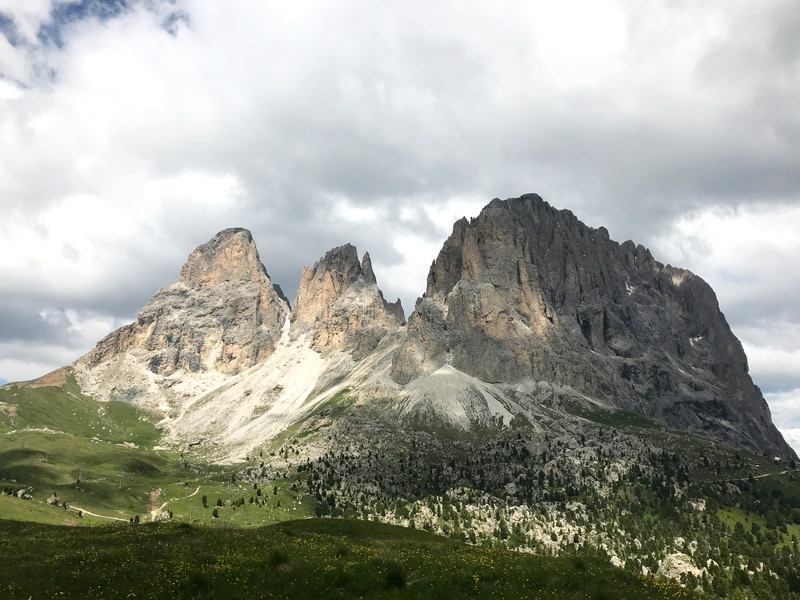
Langkofel
The highest peak at Seiser Alm, located in the group of the same name. Its melodious Italian name caught my ear - Sassolungo. It's the only one that exceeds the magical barrier of 3000 meters. At its highest point it reaches 3181 m above sea level.
However, to conquer it you need climbing skills (and of course equipment). Technically it's not a difficult challenge (most of the route is rated II, around the summit III), but due to its length it requires proper fitness and preparation.
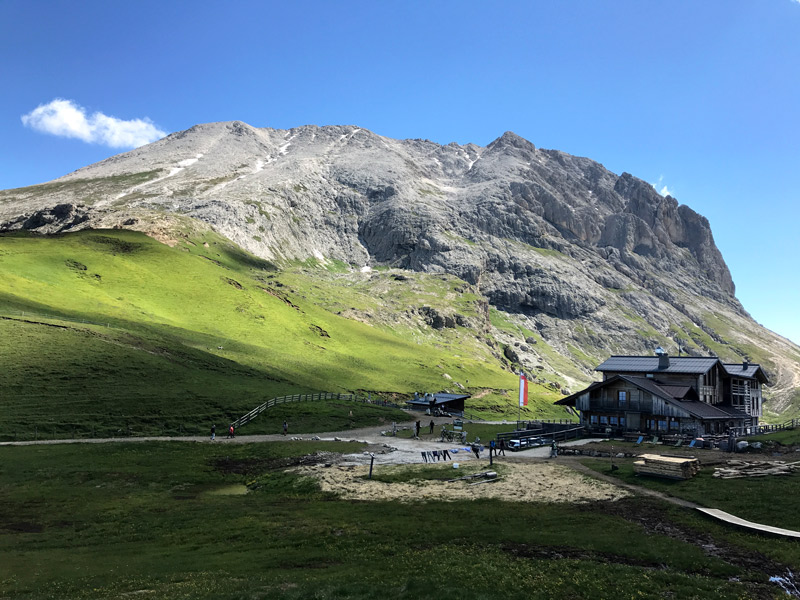
Plattkofel
This peak also belongs to the Langkofel group. It is separated from the other difficult summits by a pass where the Langkofelhütte hut is located. It reaches a height of 2964 m above sea level. Its name comes from the characteristic flattening (Platte means slab in German), the Italian name is Sassopiatto.
To the summit leads an easy trail no. 527 running along the aforementioned "slab". It starts at the Plattkofelhütte hut.
- If you're on Seiser Alm, it's best to start the route in Saltria in the east of the plateau. To shorten the route you can use the Florianlift chairlift (cost about 7 euros, from what I remember)
- If you're starting from one of the valleys, the best option will be to reach Sella Pass and from there take the gondola lift to Rifugio Toni Demetz hut on the pass between Lang- and Plattkofel.
Mountain challenge enthusiasts will also find here a medium difficulty via ferrata Oskar Schuster Steig with difficulty B/C, which will get you to the summit of Plattkofel from Langkofelhütte hut, the return is via the normal trail (no. 527). More detailed information about the ferrata HERE
Puflatsch
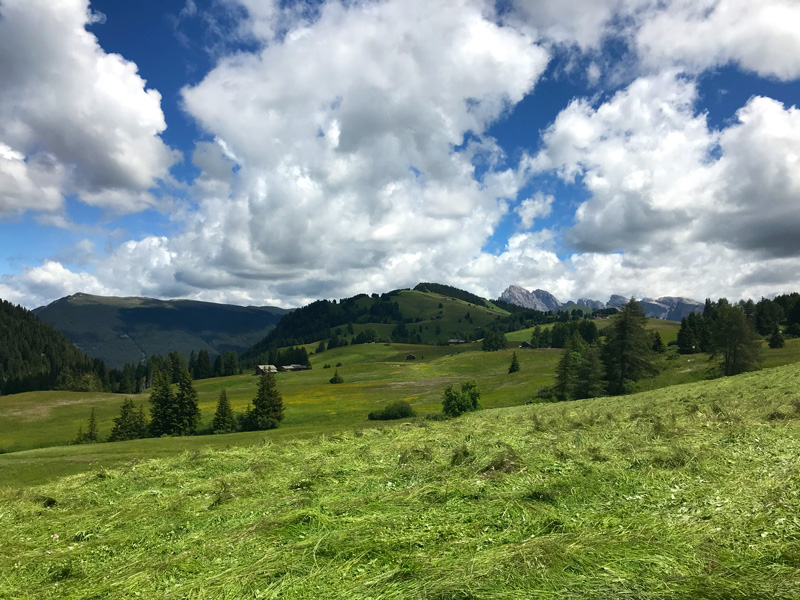
Puflatsch is not a peak, but a hill reaching a height of 2137 m above sea level located in the very center of the Seiser Alm plateau. It's worth mentioning because there are many interesting and easy trails here, and from the highest point we have a beautiful view of the entire Seiser Alm and the town of Kastelruth located in the valley. Unfortunately, I didn't manage to visit this place, so I won't treat you to a photo of it :(
The most interesting option here is Puflatsch-Rundweg, a loop around the hill, about 10 kilometers long, during which we'll visit several unique places.
One of them is the so-called "Witches' Benches" (German: Hexenbänke), a specific rock formation looking like stone seats at the very top of Puflatsch. According to local legends, the witches of Schlern (more about them in the last post HERE) favored this place because of the surrounding view - from here they could closely observe the towns located below.
Most likely, however, this is a very ancient place of worship (researchers assume it dates to 8000-1000 years before Christ), where local people paid homage to ancient gods.
Rosszähne
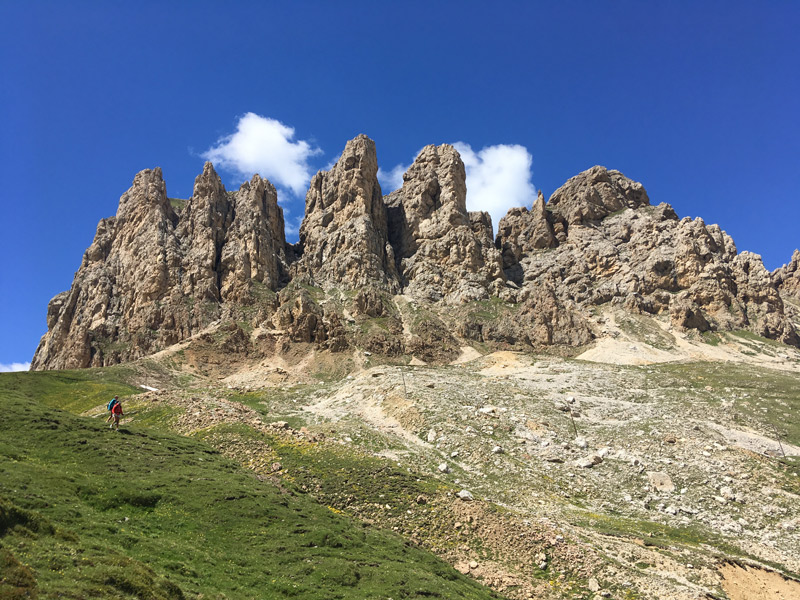
This is a characteristic group of peaks located on the border of Seiser Alm and the Rosengarten region. It neighbors the Schlern group. The highest of its peaks - Große Rosszahn has a height of 2653 m above sea level.
At their feet is the excellent Tierser Alp hut (their cuisine is amazing - you must try it!). For mountain thrill lovers there's a short (1.5 hours) but very interesting via ferrata Maximilian with difficulty B. It runs along the entire group and ends at the summit of Roterdspitze (2655 m above sea level) in the Schlern group (more details about this via ferrata HERE).
If you prefer more peaceful hikes, you'll find a trail running at the foot of Rosszähne, also towards the Schlern group. Conquering this symbol of South Tyrol along with a visit to the Tierser Alp hut is an excellent combination, in my opinion one of the more interesting in this region. This adventure is a whole day of amazing views. Technically easy, but requiring fitness
Schlern
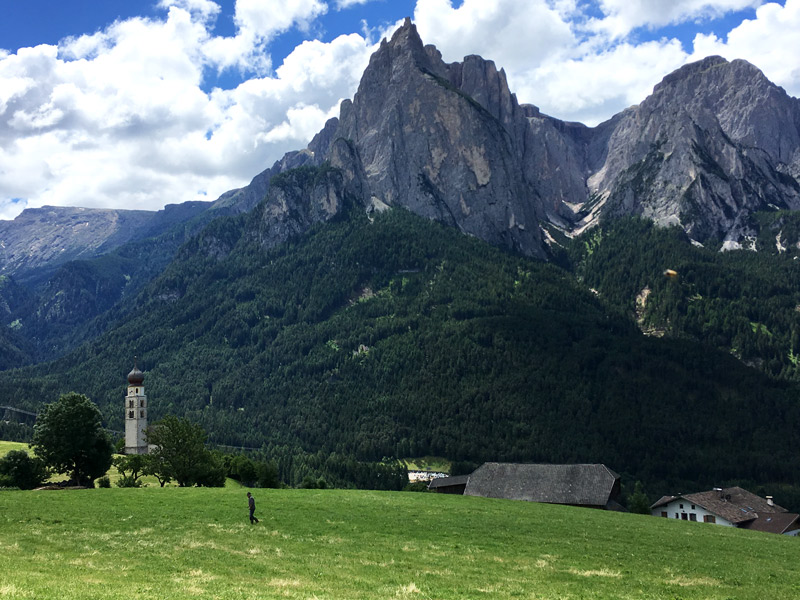
Here it is! Shrouded in myths for centuries, standing guard at the entrance to Seiser Alm, the symbol of all South Tyrol - Mr. Schlern. It is located in the group of the same name, the highest point is 2563 m above sea level, called Petz.
Most of the massif has the character of a plateau and is very easily accessible, even for people inexperienced in mountain battles ;) The most popular trail leading to Schlern is Touristensteig from the town of Compatsch on Seiser Alm. The entire trip both ways is an easy 5 hours, which you can shorten by taking the lift.
This is not the only trail leading to it - from the town of Völs am Schlern there are several trails of varying difficulty levels, so you don't have to take the lift up to Seiser Alm to conquer the king of these parts.
If you're an experienced mountain veteran who's not afraid of precipices, I have a little gem. From Ums, which is part of Völs am Schlern you can climb Schlern via Tschafon, Hammerwand und Tschafatschsatte with quite a decent dose of adrenaline along the way
At the top you'll find the Schlernhaus hut, which will let you gather strength before the summit attack. Although you won't need much more - to the highest point (Petz 2564 m above sea level) it's only 15 minutes of simple hiking.
Summary
For now, this is unfortunately the end of our adventure with Seiser Alm. My short, 3-day trip didn't allow for collecting more materials. On the other hand, I gained an overview of the situation and know well what places to discover next year. I hope I made it easier for you too. I recommend taking Seiser Alm into account, as well as the entire Dolomites when planning your vacation. Definitely worth it!
If you're looking for more inspiration in those regions, I invite you to my other posts from the Dolomites: