Falzarego: A Mountain Pass Museum in the Heart of the Dolomites
Table of Contents
Located at an altitude of 2105 meters, surrounded by majestic peaks made of light and hard dolomite rock. It was one of J.R.R. Tolkien's inspirations when writing "The Lord of the Rings". Possessing a painful history, also filled with myths. This is Falzarego, our heroine today.
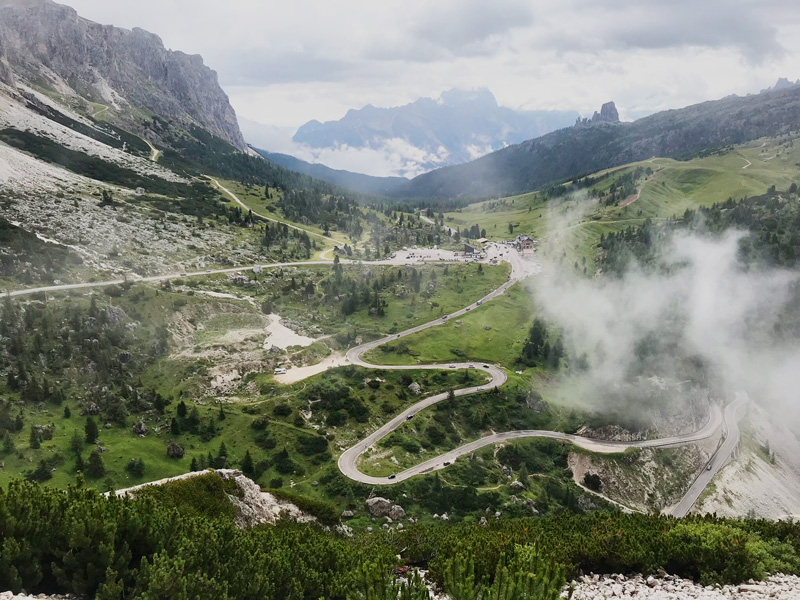
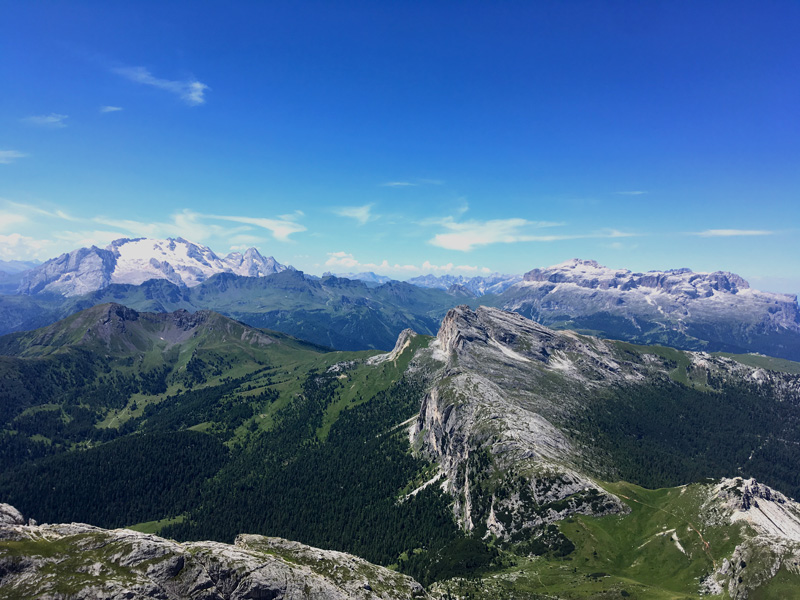
View of the highest peak in the Dolomites - Marmolada (on the left) and Sella (on the right Falzarego Pass is located in northern Italy, in the province of Belluno, near the border with South Tyrol. It connects the town of Cortina d'Ampezzo with Fodom and Al Badia, as well as the Cordevole valley. The neighboring pass, located on the other side of the Sasso di Stria peak, is called Valparola (2168 m above sea level). Falzarego itself is located at an altitude of 2105 m above sea level, surrounded from the northeast by one of the main massifs of the Dolomites - the Tofana massif. To the south rises Monte Averau (2650 m above sea level) in the Nuvolau massif.
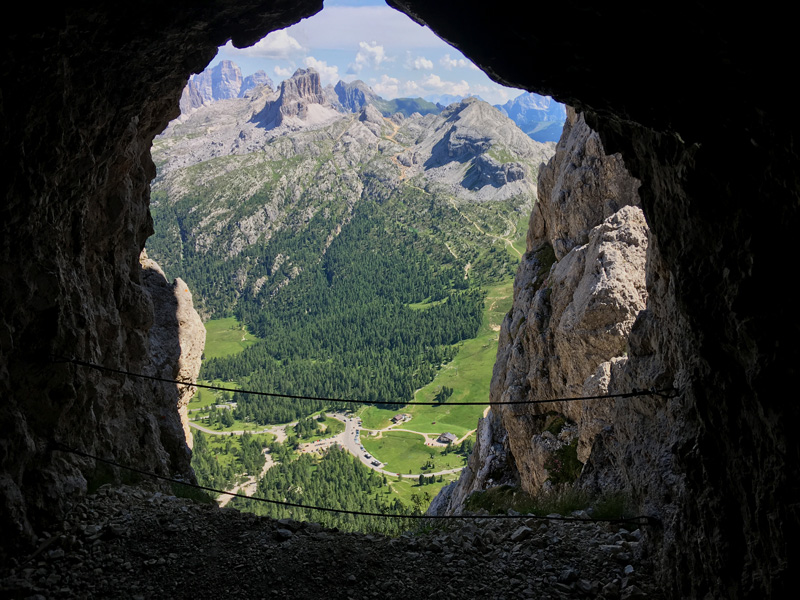
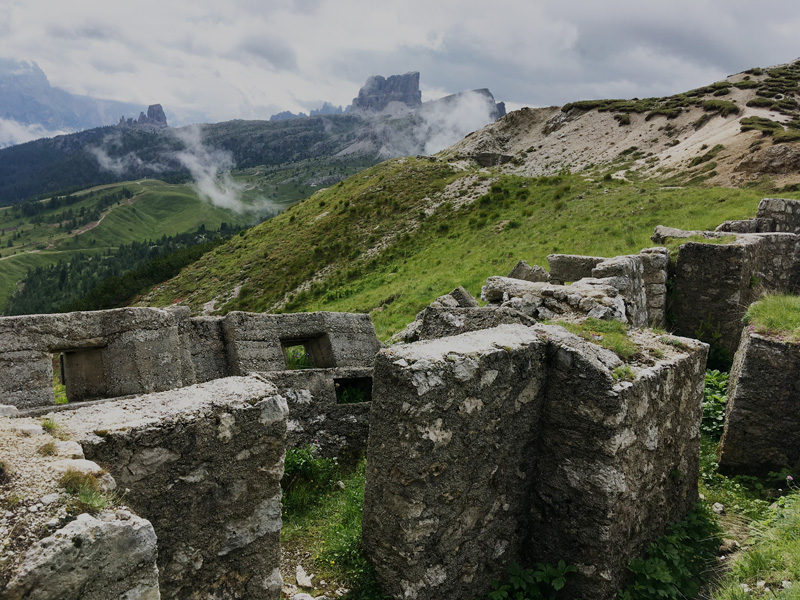
View of Cinque Torri from the fortifications inside Lagazuoi
Location and Access
As is usually the case in mountain regions, the best option is to travel by car on site. The big downside of this solution is the necessity of a several-hour journey by car (from Poland), but you gain great flexibility on location. You can reach Falzarego by car in two ways. Depending on your starting point, it will be either a journey through Bavaria, Innsbruck and Bozen in South Tyrol, or through the Czech Republic, Austria (Vienna, Klagenfurt, Villach). Remember about vignettes for the Czech Republic and Austria! If a car trip doesn't suit you, you can choose the public transport option. Just fly to Venice (many cheap flights from various parts of Poland). From there, buses run daily to Cortina d'Ampezzo (Cortina Express - LINK and ATVO - LINK). From Cortina, several transport companies run through Falzarego.
"The False King"
View of Sasso di Stria and Lagazuoi. The Guardians of Falzarego[/caption] This is how the name Falzarego sounds in free Italian translation. Its source is one of the local fables about the "Kingdom of Fanes". It tells the story of the royal family of this kingdom. The axis of the story was the conflict between the male, aggressive members of the royal family and the female, peacefully inclined ones. There's no need to delve into the details of the fable, we are most interested in the decisive battle during which the king committed treason and enabled the aggressors' victory, for which he was turned into a rock visible from the pass on the Lagazuoi massif. Hence the name "False King". The female members of the family had to flee after the defeat and hid underground, thanks to the help of marmots who were their friends. And so to this day, in the wilderness of the Dolomites, they wait for better times.
World War I
Shooting positions at Sasso di Stria[/caption] Falzarego also has its very dark history that took place over a hundred years ago. The pass was part of one of the bloodier fronts during World War I, the first major conflict in history with the use of weapons of mass destruction and mechanical vehicles. The Austro-Italian border ran through Falzarego. At the end of the 19th century, the Austrians built Fort Tre Sassi between it and Valparola Pass, which was part of an extensive network of Austro-Hungarian border fortifications. The rapid development of technology meant that just a few years after its construction, it was already too outdated to cope with modern types of weaponry. The Austrians were well aware of this and from the very beginning of operations in that region, they secretly built a network of fortifications on top of Sasso di Stria (Italian: witch's rock) and Piccolo Lagazuoi. They left only a few people in Tre Sassi, whose task was to simulate full occupation (there were 37 men plus an officer). After the fort was destroyed by Italian artillery, the Austro-Hungarians withdrew to the mountains and began a long positional war.
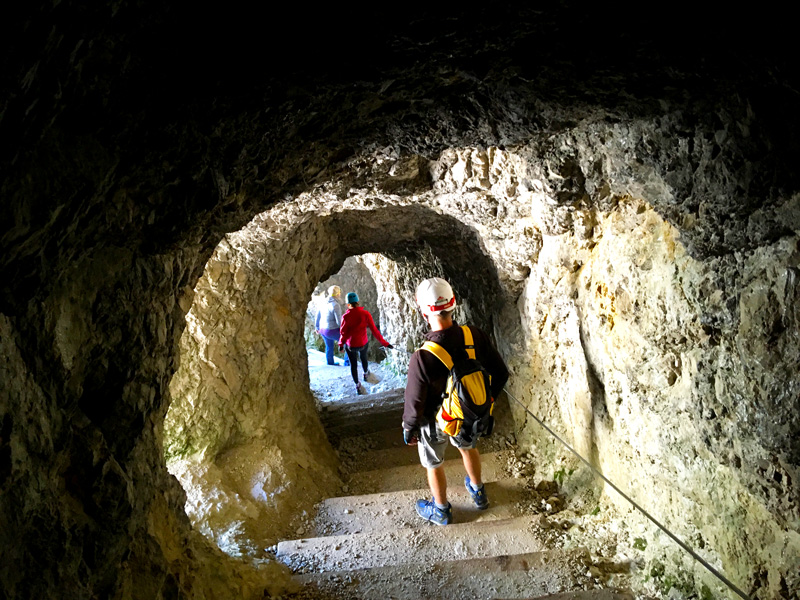
Tunnel inside Lagazuoi The Italians decided to build their fortifications on the other side of Lagazuoi. They are currently restored and can be visited. The entrance to them is located next to the upper cable car station. A helmet and flashlight are required! The tunnel on Lagazuoi is the largest such facility from World War I times in the Dolomites. For two years, both sides of the conflict tunneled under each other and tried to blow up the opponent's fortifications using many tons of explosives. Five such attempts were recorded (the last, Austrian one took place on September 17, 1917). Neither side gained an advantage through them. The conflict in these areas lasted three years and brought huge human losses. It is estimated that the official casualty figures are significantly underestimated, so there's no point in giving them here. It's worth mentioning that 2/3 of the soldiers died not as a result of enemy attacks, but due to the action of natural forces. Wandering among the restored tunnels, sometimes you get chills down your spine. You can literally feel the history of this place, those thousands of wasted human lives... You have to experience it personally. At Falzarego Pass, as well as throughout the Dolomites, there are many traces from World War I times, you can come across them literally at every step, which is also where the idea for the title of this post came from.
Accommodation
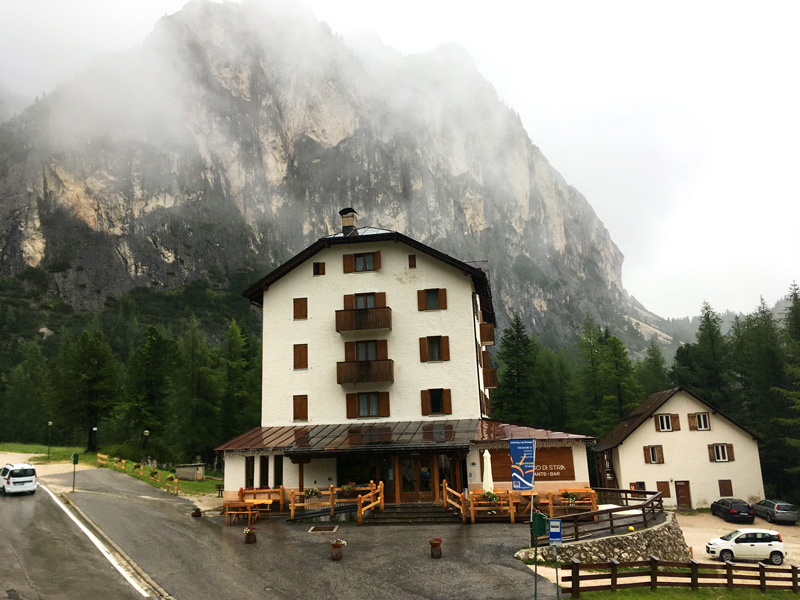
For my part, I can recommend one tried and tested place, right at Falzarego Pass. It's Hotel al Sasso di Stria, located at about 1900 m above sea level with a beautiful view of Lagazuoi. It is currently run by an entirely Polish staff, the rooms are nice and clean, and the cuisine is simply masterful! The facility is open in the summer and winter seasons. Mountain expeditions start at its doorstep, I love that! For details, please visit their website (link HERE) and Facebook fanpage (link HERE).
What's Next?
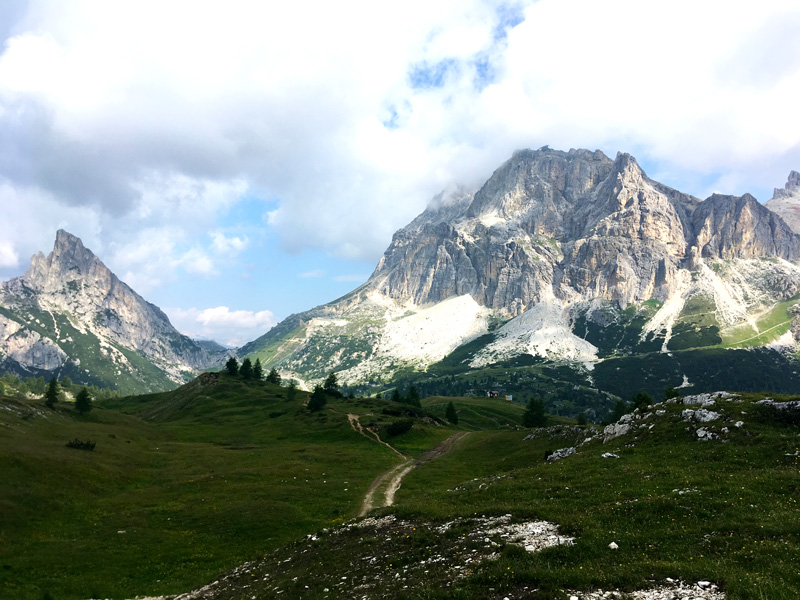
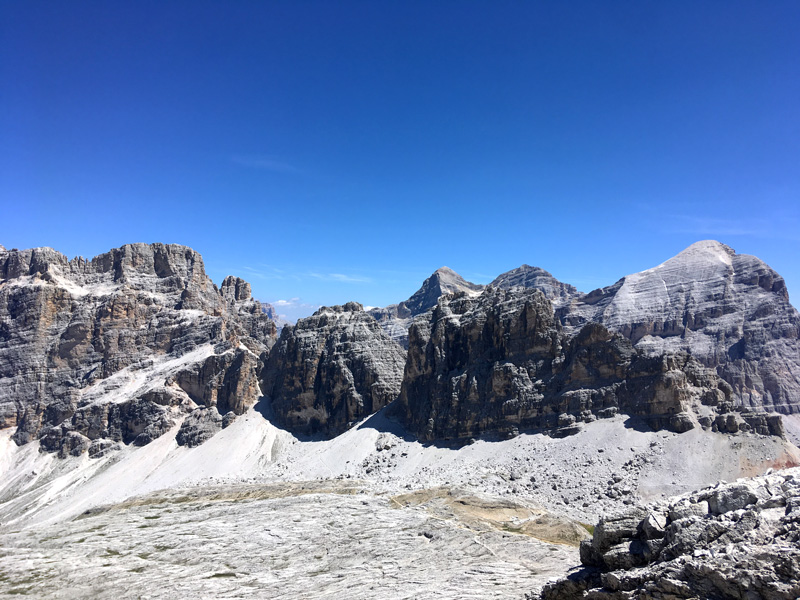
View of the Tofana massif, one of the main massifs of the Dolomites[/caption] This is of course not the end of our journey through Falzarego! This was just a warm-up. In the next post, I'll tell you about the most interesting peaks, trails and via ferratas in the area of Falzarego Pass, that is, the quintessence of these areas. Follow me on social media, and the next portion of adventures will definitely not pass you by!
Cookie Settings
We use cookies to analyze website traffic and optimize your experience. You can choose which cookies you allow.
Cookie Settings
We use cookies to analyze website traffic and optimize your experience. You can choose which cookies you allow.
Necessary
Required for the website to function properly. Cannot be disabled.
Analytics
Help us understand how visitors use our website to improve it.